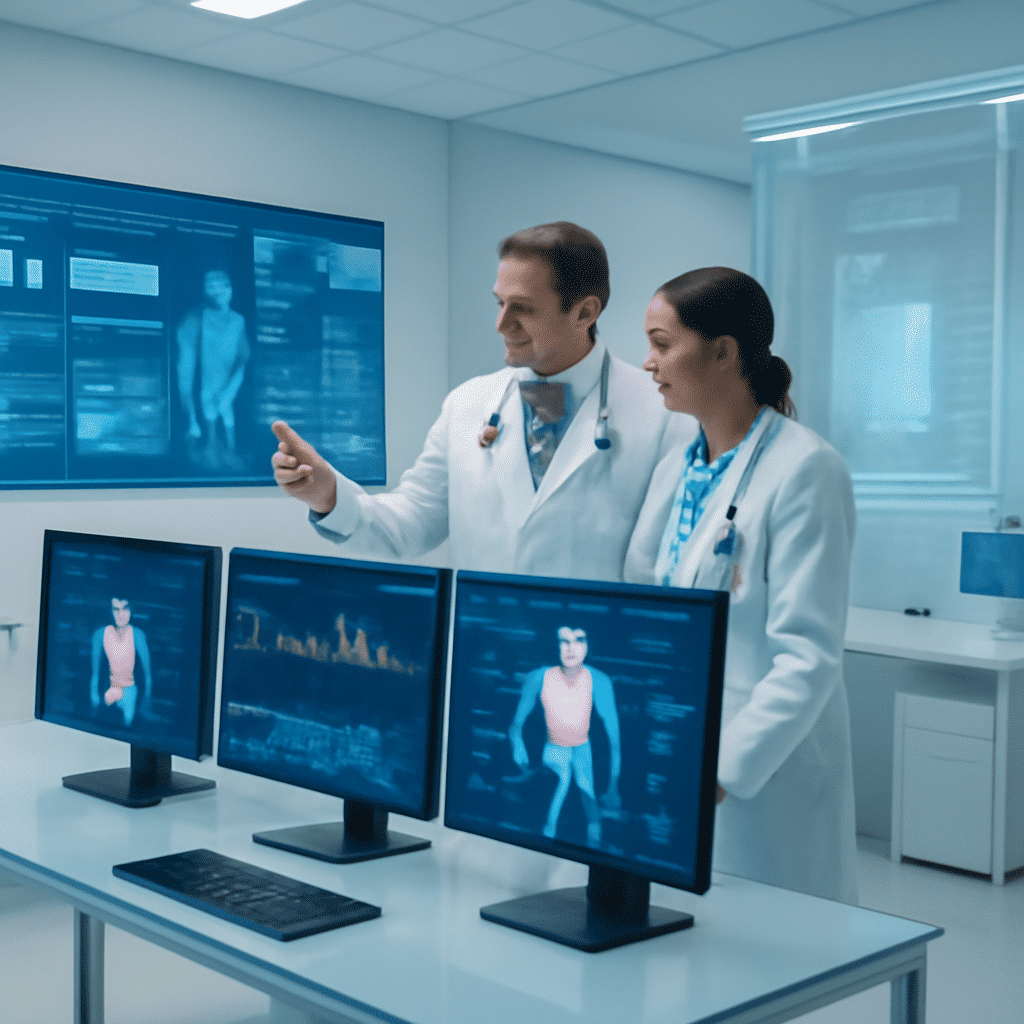
In recent years, artificial intelligence (AI) has undeniably become a driving force in transforming various facets of our lives, with the field of medical science sitting prominently at the forefront of this revolution. The integration of AI into healthcare is not just a fleeting trend but a foundational shift that promises to redefine the landscapes of disease diagnosis, treatment planning, and patient care as a whole.
One of the most significant ways AI is reshaping medical diagnostics is through the enhancement of imaging techniques. Radiology, a discipline heavily reliant on the interpretation of medical images, has seen remarkable advancements with AI algorithms that can analyze CT scans, X-rays, and MRIs with unparalleled precision. These algorithms, armed with the ability to learn from vast datasets, can detect anomalies such as tumors or fractures that even the human eye might overlook, fostering earlier and more accurate diagnoses. This not only accelerates the diagnostic process but also reduces the margin for error, ultimately improving patient outcomes.
Furthermore, AI is revolutionizing pathology by enabling digital pathology-assisted diagnostics. Pathologists are now leveraging AI-driven technologies to analyze tissue samples swiftly and accurately, identifying complex patterns that could indicate diseases like cancer. The integration of machine learning has been particularly transformative, allowing systems to learn from historical data to predict disease progression and enable personalized treatment strategies.
Moving beyond diagnostics, AI is playing a critical role in treatment planning and decision-making. AI systems can analyze a patient’s health data in combination with extensive clinical guidelines and historical outcomes to suggest highly tailored treatment options. This personalization means that treatment plans are more closely aligned with an individual’s unique genetic makeup, lifestyle, and disease profile, which can lead to more effective and efficient healthcare solutions.
AI’s impact is also being felt in predictive analytics, an area crucial for early intervention strategies. By studying patterns within electronic health records and real-time patient data, AI can predict the likelihood of disease outbreaks or individual patient readmissions. This foresight offers healthcare providers a proactive tool to manage populations' health and deploy resources more efficiently, potentially reducing the burden on healthcare systems and improving patient satisfaction.
The advent of AI in medical science extends even to drug discovery and developmental phases. Machine learning algorithms can swiftly process biological data to unveil novel drug candidates, significantly reducing the time and cost traditionally associated with bringing new drugs to market. This capability accelerates the development of interventions for diseases that currently lack effective treatments, opening new avenues for therapeutic advancements.
Despite these profound benefits, the integration of AI in healthcare does not come without its challenges. Ethical considerations, such as patient privacy and data security, require robust frameworks to ensure that AI applications in medical settings respect and protect patient rights. Additionally, the interpretation of AI recommendations necessitates rigorous validation from medical professionals, as an over-reliance on technology can sometimes obscure human error or bias inherent in algorithmic designs.
Looking to the future, the collaboration between human intelligence and artificial intelligence in medicine holds incredible promise. By empowering healthcare professionals with advanced tools, AI is enabling a more accurate, efficient, and empathetic approach to healthcare. As AI continues to evolve, it will undoubtedly unlock new potentials, transforming medical science into a more innovative and patient-centric discipline.